

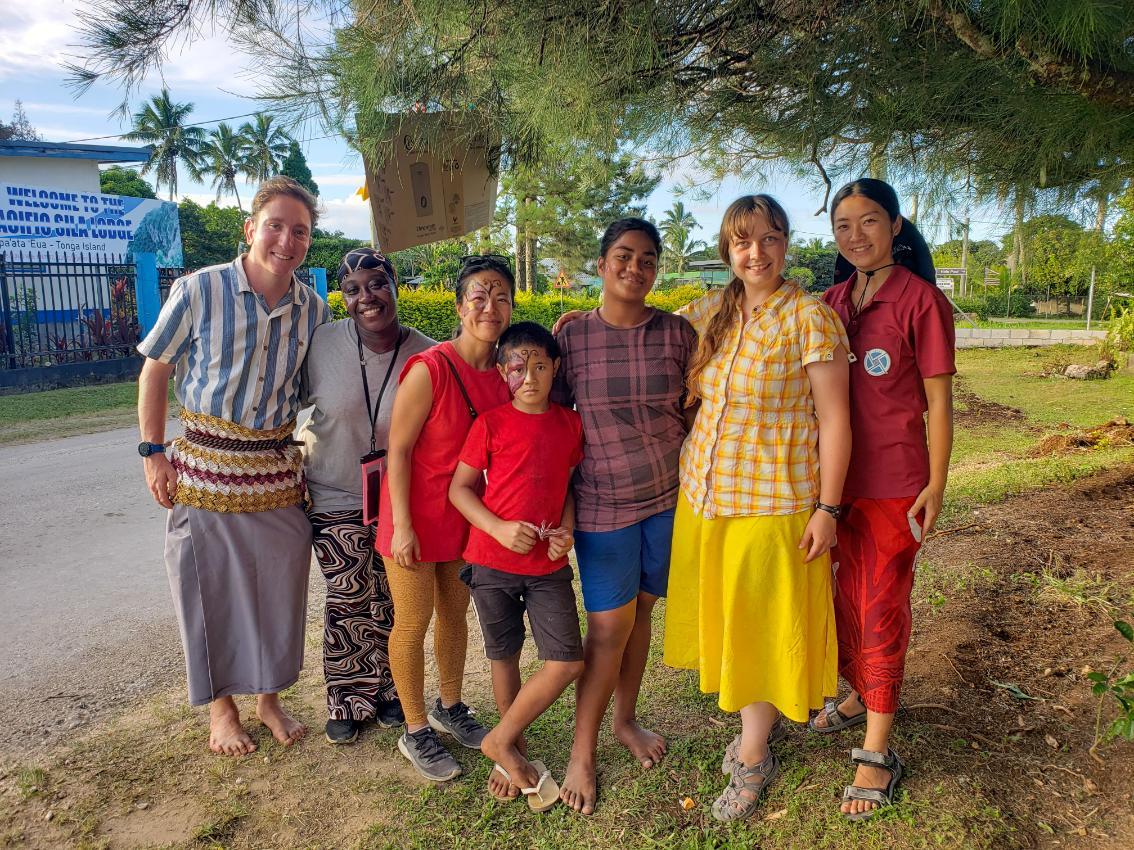
Even after spending a semester abroad in Argentina as an undergraduate, Taylor Bauer ’20, M.S. ’21, knew acclimating to another new country and culture with the Peace Corps would be a challenge. As an English and special education teacher, she also understood that building personal connections with students and the community is essential for educators, and that doing so with a potential language barrier would complicate the process even more.
So when the Peace Corps assigned Bauer to a teaching position in Tonga — an island nation approximately 2,000 miles off the coast of Australia, its closest continent, and more than 7,000 miles from her hometown of Staunton, Virginia — she knew she had her work cut out for her.
Luckily for Bauer, she and her new Tongan neighbors quickly found they were both fluent in another common language: food.
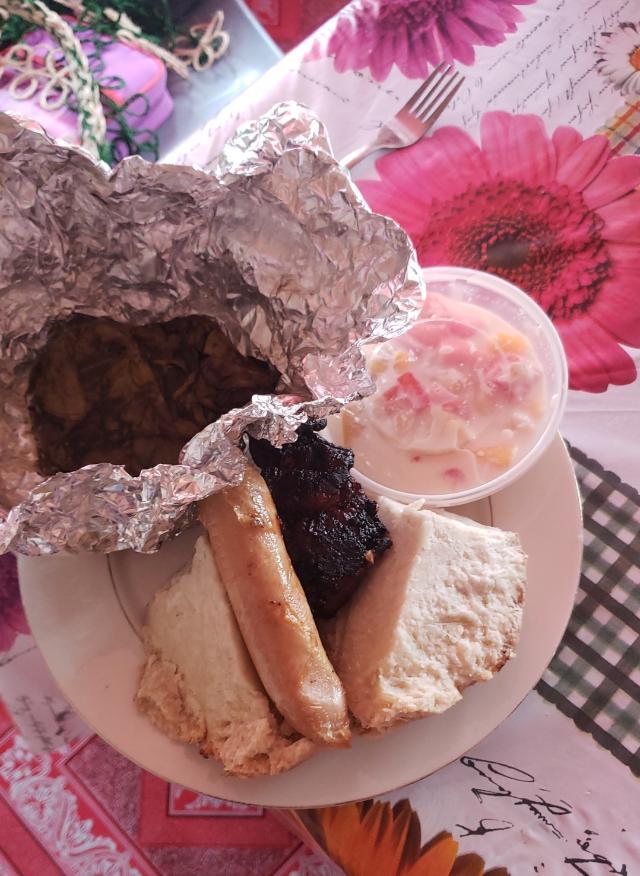
“Feeding people is a way of showing respect and care and love in Tonga,” she said. “I don’t have a problem with that because I love to eat food and I can eat anything.”
Leveraging that universal culinary connection and the Civitae-minded community engagement she practiced at Longwood, Bauer has quickly endeared herself to her new neighbors on the Tongan island of ‘Eua. By schoolday she teaches English to students in the American equivalent of elementary and middle school; by night (and weekend), she lives as a Tongan.
“I think I first heard about the Peace Corps when I was in high school,” she said. “I knew I wanted to be a teacher, and I’ve always loved learning other languages and about other cultures and different ways of living you’ve never even considered.”
In preparation for a teaching career, Bauer majored in liberal studies at Longwood and went on to earn a Master of Science in special education from Longwood’s College of Graduate and Professional Studies (CGPS). After graduating, she taught special education in Augusta County Public Schools in Fishersville, Virginia — a rewarding experience, she notes — but the draw of joining the Peace Corps persisted.
So many people have helped me, and the opportunity to serve somewhere abroad doesn't come up for everyone. I felt a little obligated to say 'Do you need my expertise? What can I do? And in the meantime, what can I learn from you?'
Taylor Bauer '20, M.S. '21
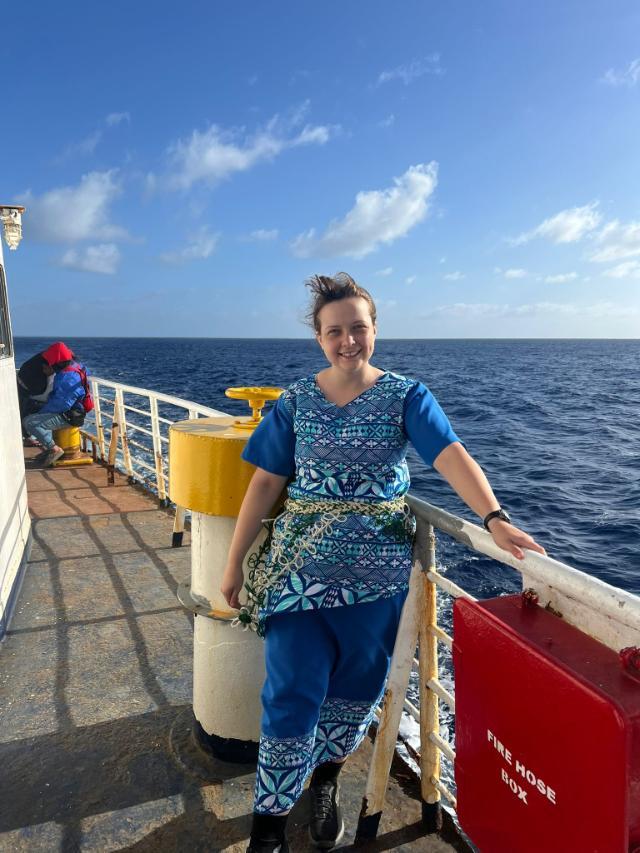
“I just figured so many people have helped me, and the opportunity to serve somewhere abroad doesn’t come up for everyone,” she said. “I felt a little obligated to say, ‘Do you need my expertise? What can I do? And in the meantime, what can I learn from you?’”
With that mentality, Bauer became a Peace Corps volunteer and accepted a teaching post in Tonga. Aided by an unending parade of food that served as an ever-present icebreaker, she grew her Tongan vocabulary beyond what she learned during Peace Corps training, learned through trial and error (mostly error) the differences between Tongan netball and American basketball, and expanded her wardrobe to include an impressive collection of handmade and gifted traditional Tongan garments.
By immersing herself in her new community — and by sharing some of her own favorite recipes, such as pizza, lasagna and red velvet cookies — Bauer says she felt those social and cultural barriers tumble.
“Most Sundays after church, somebody will ask if I’ve eaten today. That’s a super normal question to ask at any time,” she said. “I may have had some crackers earlier in the morning, and they’ll just say, ‘Oh, come to my house — I will feed you and then send you home with extra lū [a traditional Tongan after-church meal, pronounced loo].’”
Now seven months into her two-year Peace Corps service, those connections have paved the way for Bauer to make a major impact in her Tongan classrooms. As an English language teacher, she integrates other subjects like history, math and science into her lessons.
However, her role — and a key reason for the Peace Corps’ presence in Tonga — is about more than simply teaching students a new language. Tongan is rarely spoken away from the islands, so for those who wish to pursue work elsewhere, learning English greatly increases those opportunities. In fact, English fluency is a lifeline that many Tongan citizens rely on, as a large portion of the country’s economy is supported by expats who work abroad in English-speaking countries and send a portion of their earnings back home.
“The Tongan language is central to their culture but rarely reaches beyond the Tongan community,” Bauer said. “So as a matter of just being able to operate in the world around them, learning to speak English is critical. A lot of times when I talk to the adults, and even some of the students who are thinking a little bit more ahead, they understand that if they don’t know English, Tonga is pretty much the only thing their world can be.”
Also thanks to her background in special education, Bauer is frequently called on to do more to support her students and fellow teachers. From her Longwood education and American classroom experience, she has brought with her a variety of teaching strategies and a special education mindset that she models and shares with her fellow faculty.
Bauer’s efforts have earned her the nickname ‘Eku Palangi,’ a term that translates to foreigner or tourist. And while she and her Tongan neighbors are now on a first-name basis, her students still use it as a term of endearment.
Palangi can be used for pretty much all foreigners, especially those with a lighter skin tone like me. But they always call me ‘Our Palangi’ — and then they invite me into their home and give me a plate of food.
Taylor Bauer '20, M.S. '21
“Palangi can be used for pretty much all foreigners, especially those with a lighter skin tone like me. But they always call me ‘Our Palangi’ — and then they invite me into their home and give me a plate of food,” she said.
Bauer is one of several ‘palangis’ in Tonga working on the islands as Peace Corps volunteers. But while many of the others focus on environmental work on neighboring islands, Bauer is one of only two Peace Corps educators on ‘Eua and the only one at her school. She notes that she is anything but isolated, however, thanks to the welcoming, communal nature of the Tongan people, the frequent opportunities to socialize with her neighbors — from feasts to festivals, sports and ceremonies — and her own willingness to become part of that community.
“Sometimes on Saturdays we’ll go watch rugby games, which have gone as long as eight hours,” she said. “I also joined a Zumba group, which has a lot of people who are more into fitness and weight loss and healthy eating. That group is also just women, so it’s a good chance to get together outside of crafting circles and other gatherings where the women are able to socialize and support each other.”
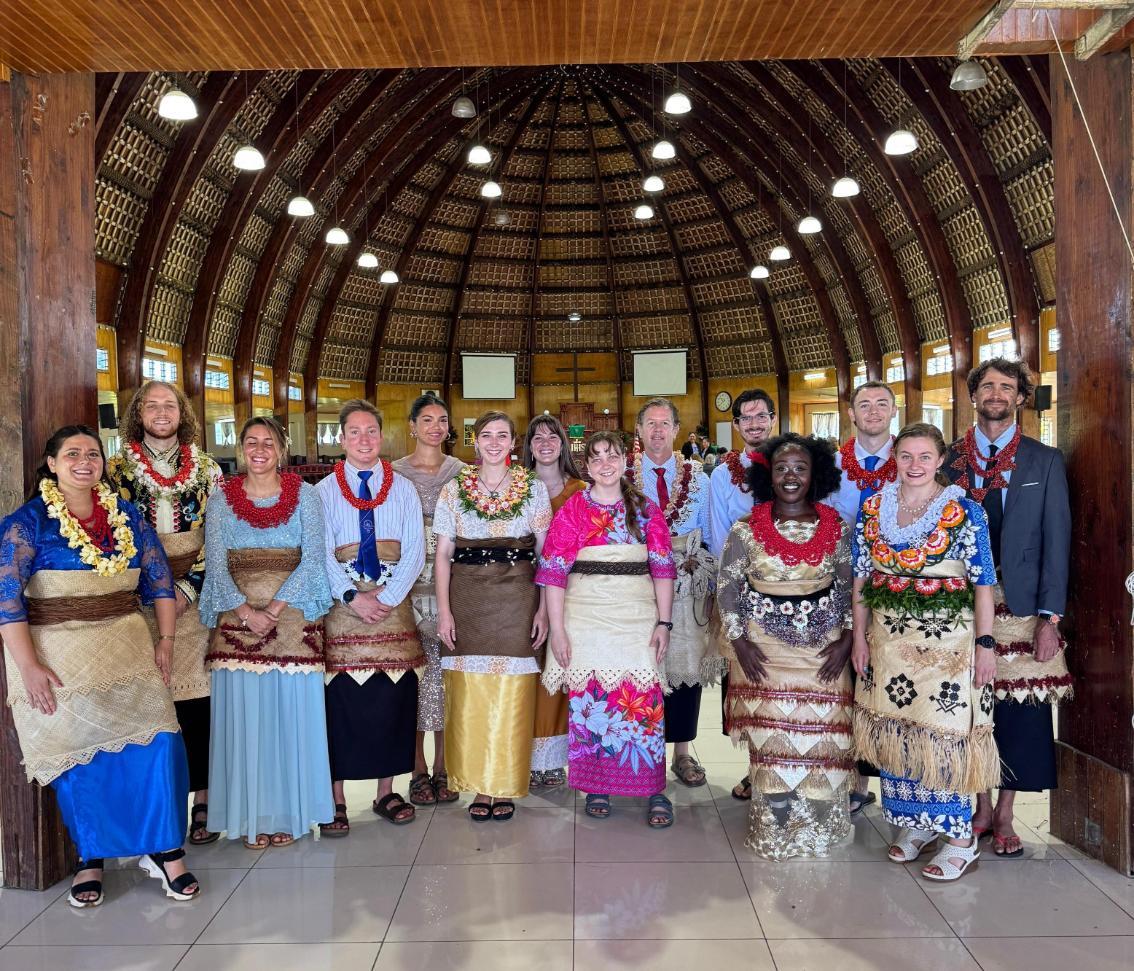
She has also been selected to serve as a tou’a — a hostess of sorts — for the village’s kava ceremonies. A socially prominent role typically held by an unmarried young woman, the tou'a prepares, pours and distributes kava — a drink made from a native plant known for its relaxing effects — to the group of men taking part in the ceremony. The centuries-old tradition is widespread in the Polynesian Islands and an almost-daily occurrence in Bauer’s village.
Through ceremonies like the kava circles, Saturday afternoons at rugby and opening doors to new opportunities for her students, Bauer’s acclimation from Tongan newbie to ‘Our Palangi’ has been a quick one. Her tenure with the Peace Corps, however, is far from over. Bauer’s volunteer term in Tonga runs until September 2027, giving her plenty of time to improve at netball, learn lyrics to new Tongan songs and impart bits of educational wisdom that could one day make a difference in a student’s life.
And, of course, to share as much food as she can stomach.